
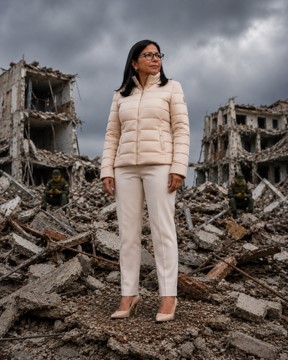
The response of the Venezuelan regime and its Armed Forces to the two earthquakes of magnitude 7.2 and 7.5 has been characterized by a combination of delays, operational improvisation, and a heavy reliance on international aid. The UN Resident Coordinator in Venezuela reported that the organization will acquire 10,000 body bags, which gives an idea of the scale of the catastrophe, with areas particularly hard hit in Caracas and La Guaira.
The first critical issue was the speed of the response. To begin with, the Venezuelan Foundation for Seismological Research (Funvisis) published its first report 3 hours and 40 minutes after the events. In seismic disasters, the first hours are crucial. Reports indicate that many residents and volunteers began rescue efforts with improvised tools and without training, before there was a sufficient state presence. This indicates the lack of implementation of plans for deploying urban search and rescue, as well as rapid command, control, and communication protocols. Rescue groups, both volunteers and officials, are the first line of defense. At least the volunteers reacted with relative urgency but were overwhelmed by the magnitude of the task at hand.
The National Armed Forces (FAN) should be the most important logistical instrument: transportation, field hospitals, engineering, communications, route control, fuel, security, and debris removal. Likewise, their presence in controlling access to the affected areas is always essential in situations like these to prevent looting and to coordinate, along with Civil Protection, a coherent management of search and rescue operations. The reality was, and continues to be, that the FAN’s extremely low operational readiness has resulted in minimal logistical support and a highly negative impact on its control and security activities due to the politicization of access to the disaster zones and the lack of military discipline in a disorganized and poorly trained contingent. An expert consulted by AlertaVenezuela stated that the FAN’s operational readiness today hovers around 30%, while the usual level for a moderately efficient armed force is 70%.
Regarding the rescue efforts, media and social networks showed that civil society acted first: family members and neighbors, along with some volunteer rescue groups, dug, compiled lists of the missing, and appealed for help on digital platforms. Social media became a key mechanism for locating the missing, while the UN and NGOs called for the lifting of restrictions on these platforms to improve coordination. This is revealing: when people rely on social media to obtain official information, there is a lack of leadership and transparency.
Undoubtedly, the magnitude of the disaster exceeds the ordinary official capacity. Two strong earthquakes in less than a minute, collapsed buildings, damaged infrastructure, disrupted communications, and overwhelmed hospitals constitute an extreme scenario. However, response plans assess scenarios like these and design the response accordingly. The regime’s reaction revealed its ineptitude and institutional dismantling in disaster management, as well as the transformation of the National Armed Forces (FAN) into an essentially repressive entity, rather than an institution guaranteeing the nation’s comprehensive security. It is worth noting that both Funvisis (National Foundation for Social Inclusion of Victims of Infections) and Civil Protection, absent during the initial hours, are attached to the Ministry of the Interior, Justice, and Peace, headed by Diosdado Cabello.
Regarding hospital capacity, it was already critically strained before the earthquakes, so hospitals were quickly overwhelmed by a lack of supplies and technical resources. Years of deterioration, shortages of supplies, migration of healthcare personnel, and failures in basic services profoundly impacted the ability to respond effectively to the emergency.
The arrival of international aid from more than 30 countries has been positive and fundamental. However, obstacles placed in the way of rescue teams delayed their rapid deployment in many cases, which has undoubtedly increased the loss of life. Even highly prestigious and capable groups of this kind were denied permission to go to Venezuela. The humanitarian aid in the form of supplies received from abroad and from other countries is also a matter of concern. There are reports of obstruction in its management and distribution, and a high risk of corruption. Strict oversight of this crucial phase in providing relief to the vulnerable population is key. A commission made up of the Federal Emergency Management Agency (FEMA), the UN, CARITAS, and similar organizations would be the most prudent course of action to guarantee the transparent management of aid.
It is also important to mention the concern regarding the exploitation of the housing crisis generated by the earthquakes to promote expropriations that are later left unpaid, or to force families to share housing.
On the other hand, the response became bureaucratized, reflected in the militarization order for the state of La Guaira (formerly Vargas) two days after the disaster, the creation of a General Staff “for the establishment of temporary camps,” a presidential commission to assess the habitability of homes, and a registration system to authorize access to the affected areas, which began as a digital system but ended up being managed manually due to a system failure.
Incompetence and slowness were not the worst aspects of Chavismo. In monitoring the first four days after the catastrophe, AlertaVenezuela recorded obstruction in the distribution of supplies collected by civil society volunteers in at least twelve states of the country, in addition to prohibiting attention or movement to different teams of firefighters and other rescuers and doctors, protocol acts with the rescue teams distracting them from their objective of saving lives, detention and monitoring of volunteers and rescuers, obstruction of the work of interpreters, journalists and community communicators.
Countless acts of corruption and looting have also been reported, ranging from the theft of belongings from damaged apartments by soldiers and police and the extortion of machinery transporters to allow them passage, to charging families of the deceased for the return of bodies. This arbitrariness and abuse have begun to provoke a response from the population. AlertaVenezuela documented at least ten confrontations between the population and police and military personnel, highlighting a challenge that could spiral out of control if those in power insist on imposing their will through control, arbitrariness, and force.
The government reacted late and is not leading effectively. The Armed Forces have demonstrated their low operational capacity and very poor discipline and training. Civil society and social networks filled the information and aid gaps. Hospitals faced a pressure for which they were unprepared. International aid became indispensable. The tragedy exposed a structural weakness of the Venezuelan state: a strong capacity for political control, but a weak capacity for modern civil protection. Legitimacy lies not in official broadcasts or armed deployments, but in rescued lives, transparency, functioning hospitals, and aid entering without hindrance. This is where the de facto government’s response is called into question.
The omission due to a lack of timely response is explained, though not justified, by the incapacity that has plagued Chavismo for decades. Adding to the gravity of the tragedy is the active and deliberate obstruction of rescue efforts and the distribution of supplies for the purpose of persecution, which must be recorded as a state crime. As Professor and researcher Thairí Moya has pointed out, “The deliberate denial of access to assistance, when it is part of a widespread or systematic attack, can constitute a crime against humanity.”
The international community has done its part, and with great generosity: providing supplies and equippments, accompanying, and assisting. It is not its role to replace the state, but it is to forcefully demand that the state assume its role in a country exhausted by its incapacity, criminality against the population, and corruption.