
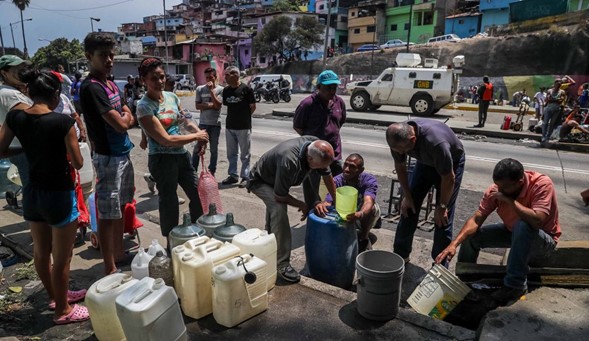
The humanitarian emergency in Venezuela continues. After more than a decade, it is still impossible to anticipate the dismantling of the humanitarian infrastructure in this country to make way for strengthening the link between humanitarian action and development. Thus, in January 2026, the Venezuelan crisis worsened, leaving the population even more exposed to both their vulnerabilities and serious risks. Just two weeks ago, Tom Fletcher, UN Under-Secretary-General, issued a statement via social media indicating that 7.9 million people in Venezuela are in urgent need of humanitarian support.
But the reality is that the UN is facing severe budget cuts and has implemented, globally, a humanitarian reset, a set of principles that define the reduction of its humanitarian structure and services. Venezuela is not exempt from this situation. The Humanitarian Response Plan (HRP) 2025 aimed to provide assistance to 5.1 million people within Venezuela, with a financial requirement of $606 million. However, it only managed to raise $102 million, 17% of the estimated funds, providing assistance to 2 million people, which represents 39% of the target. With this technical data and considering that the United Nations Office for the Coordination of Humanitarian Affairs (OCHA) did not conduct the Humanitarian Response Plan (HRP) for 2026, calculations indicate that $701.6 million is required to provide humanitarian assistance in Venezuela to the remaining 5.9 million people needed to reach the figure indicated by Mr. Tom Fletcher. Countries such as Germany ($10.8 million), Canada ($9.2 million), and the European Civil Protection and Humanitarian Aid Operations (ECHO) ($7.3 million) have made significant investments in the Venezuela Humanitarian Fund (VHF) in priority sectors such as food security and livelihoods (FSL), water, sanitation and hygiene (WASH), and protection, but the funding obtained remains insufficient.
At this point, it is necessary to address two key aspects of humanitarian assistance: financing and coordination. Regarding funding for humanitarian assistance, ECHO recently presented its Humanitarian Aid Implementation Plan (HIP) 2026, which prioritizes funding for sectors such as protection, health (emergency services and sexual and reproductive health), nutrition, and education in emergencies. However, other sectors, such as FSL and WASH, appear as support sectors that will be cross-cutting to the aforementioned priority sectors, thus weakening the funding of these sectors (WASH and), which are directly related to the prevention and treatment of diarrheal diseases and malnutrition. Therefore, there is no doubt that financing and coordination must go hand in hand.
In the context of FSL and WASH, funding for activities that include cash assistance and vouchers remains an unrealistic option within Venezuela, even though in the current context these may be valid and viable strategies. In other words, at this time it is crucial to focus on increasing and diversifying the activities of FSL and ASH, both to support other sectors such as protection, health, and education in emergencies, and to implement them autonomously. Most humanitarian assistance in Venezuela has a significant impact on households, with water purification, home sanitation, and proper solid waste management being urgent strategies for preventing disease and malnutrition.
Regarding coordination in humanitarian assistance, empowering local and national actors to lead the response in Venezuela remains a challenge for the UN. A greater commitment from Brussels or New York to the principle of localization as a new paradigm in international humanitarian cooperation is needed.
It is essential to emphasize that reviving humanitarian assistance in Venezuela is not just a matter of funding, but also of coordination between UN agencies and responsible local actors. Being able to assist people with their needs and save more lives in Venezuela is directly linked to increased and timely humanitarian funding, adequate coordination between UN agencies and the network of national and local humanitarian organizations, and greater cooperation from the country’s authorities to ensure a suitable operating environment for humanitarian actors. To achieve this, it is necessary to dismantle the coercive structure that hampers NGOs, a structure supported by laws such as the anti-social law or the law that imposes a 9% contribution to pension protection without any corresponding improvement in people’s well-being.
In the current situation in Venezuela, countries that contribute to humanitarian assistance must make their voices heard to (a) ensure the most efficient use of resources, for which it is necessary to adopt the principle of localization in humanitarian management in the country; (b) demand transparent management and due accountability of the resources from the new operating framework of oil activity; and (c) encourage a collaborative approach between UN agencies and local actors responsible for humanitarian assistance.