
This article was published by Venezuelan human rights defender Luis Carlos Diaz (@LuisCarlos) on January 12, 2026. It is reproduced in its entirety by AlertaVenezuela given its relevance to humanitarian and human rights work in the current context of US tutelage.
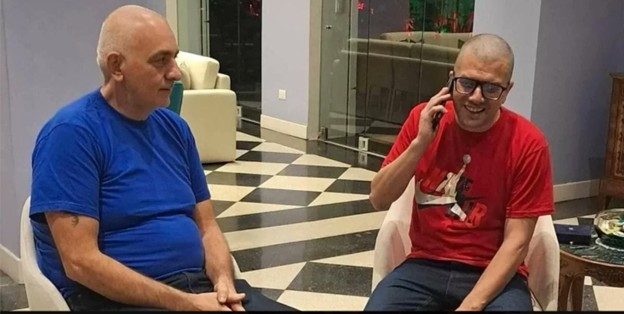
The Chavista regime held two humanitarian workers hostage. Alberto Trentini was one, now released, and the other was the Colombian Manuel Tique, about whom we are still awaiting news. A campaign was launched in Italy for Trentini; his family never stopped, and the Italian government did everything possible while Venezuela’s repressive and diplomatic apparatus closed its doors to them and restricted their actions. Several officials from the Italian, French, and Dutch embassies were even expelled from the country. Those who remained, along with staff from other embassies, are restricted from leaving the Caracas metropolitan area without permission from the Venezuelan dictatorship. These are the conditions under which one works in Venezuela.
But the most serious aspect of Trentini’s prolonged imprisonment—with enforced disappearance, incommunicado detention, lack of private legal representation, obstruction of consular assistance, and other violations that will be revealed later—is that it exposed the “humanitarian space” in Venezuela. It demonstrated that there were no rules of engagement, no protection, and no respect. Chavismo infiltrated and began controlling many variables in the world of urgent aid years ago, both to domesticate it and to place its public employees in humanitarian organizations and United Nations agencies. Simultaneously, it targeted anything it considered competition, expelling dozens of organizations, fabricating accusations against them like those in the Citgo report, and its security agents relentlessly extorted and disrespected the work of those who wanted to help on the ground.
Some humanitarian workers who were attacked did not receive proper attention from their agencies. Later, in Caracas, they were told things like “but nothing happened to you,” “thank you, we’ve taken note,” or the infamous “we’re concerned,” but this never translated into action. That’s why they left, because of negligence or complicity with Chavismo.
The United Nations did not do enough on this issue, and many were left unprotected. Added to this is the direct attack on the autonomy of organizations that resulted from the political intervention of the Venezuelan Red Cross through the Supreme Court and several allies of Chavismo. Now Delcy Rodríguez has enormous control there. Did terrorist groups like Hamas or the ELN hold humanitarian workers hostage? Why has Chavismo been allowed to do so without an international outcry?
This is the record that should be included when assessing Venezuela’s recent history: at the moment of greatest hunger and need, at the moment when comprehensive humanitarian action was required, the Venezuelan dictatorship imprisoned humanitarian workers, limited their geographic areas of operation, and placed several of its agents in positions of power to siphon off the humanitarian aid entering the country. This is why real action has been so severely curtailed, and the good things that have been done are diminished and somewhat invisible, because they are always at risk of intervention.
Chavismo does not accept competition in its actions on the ground and sought to campaign on the crisis of the poorest people, in addition to whitewashing the records of some officials who went from the PSUV (United Socialist Party of Venezuela) and the public administration to becoming UN officials or advisors to international implementing agencies. It is whitewashing and an unprecedented salary increase at the expense of the crisis they created.
In such a large-scale scheme, the Trentini and Tique prisons have served to extort, threaten, and control the humanitarian sector. The detention of Jude Afiuni was used to intimidate judges. Like so many cautionary cases that serve to frighten and inhibit the social fabric. So, this is not over yet.
We applaud the release of all the innocent, but we warn that the system that imprisoned them remains intact and active. Political prisoners are a renewable resource for Chavismo as long as their perpetrators remain in power.