
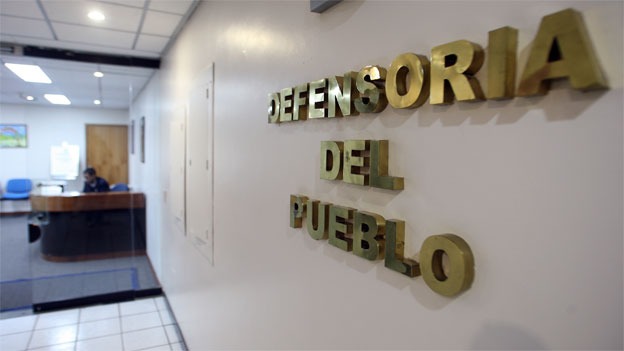
The Venezuelan Ombudsman’s Office is not independent. This was determined by the Accreditation Subcommittee (SCA) of the Global Alliance of National Human Rights Institutions (GANHRI) in its most recent report, which states that the Ombudsman’s Office “is operating in a manner that seriously compromises its independence” and that it “has not demonstrated compliance with the minimum requirements of the Paris Principles.”
The Paris Principles are the international normative framework that all national human rights institutions, known as ombudsman offices, human rights commissions, and other similar bodies, must adhere to. These principles include broad mandates and competencies, independence, pluralism in their composition, and appropriate methods of operation, including independent investigation and reporting.
As a consequence of this decision by the SCA, the Ombudsman’s Office will lose, starting in 2026, its capacity to participate with voice and vote in the international debates of UN human rights bodies and in the activities of GANHRI.
This ruling by the SCA is the second to question the independence of the Venezuelan Ombudsman’s Office. The first SCA evaluations began in the period 2007–2012, during Gabriela Ramírez’s term. In 2016, taking into account the history of lack of independence verified during Ramírez’s administration, the SCA decided to downgrade the Ombudsman’s Office from Category A (full compliance with the Paris Principles) to Category B (partial compliance), during Tarek Saab’s term.
A key factor in the most recent negative evaluation is the fact that Alfredo Ruiz was “re-elected” as Ombudsman in October 2024, even though re-election is not provided for in the Organic Law of the Ombudsman’s Office. The SCA also noted other questionable practices by the Ombudsman’s Office, such as its claim that 97% of reports of disappearances in Venezuela are “unfounded.” The SCA adds that the Ombudsman’s Office “systematically does not accept complaints and that victims have suffered reprisals for filing reports of serious human rights violations.”
The SCA also questions the role of the Venezuelan Ombudsman’s Office in defending the LGBT population, protecting migrants and foreign nationals detained incommunicado, its lack of cooperation with international and regional human rights mechanisms, its failure to submit annual reports to the National Assembly, and its limited action in the context of states of emergency declared by the executive branch. The SCA based its assessment on reports from civil society and UN human rights bodies. The Ombudsman’s Office provided little evidence in its own defense.
The SCA notes that the Ombudsman’s Office “will maintain B status until the SCA’s 48th session, to be held in 2026. This gives the Ombudsman’s Office the opportunity to provide the necessary evidence to demonstrate its partial compliance with the Paris Principles.” In the past, the Ombudsman’s Office has failed to take advantage of such opportunities for amendment, so its expulsion is highly likely to be confirmed at the end of that period.